
.png)
Steve Nygren founded Serenbe, a unique community near Atlanta, initially to protect his family's rural retreat from conventional suburban sprawl.

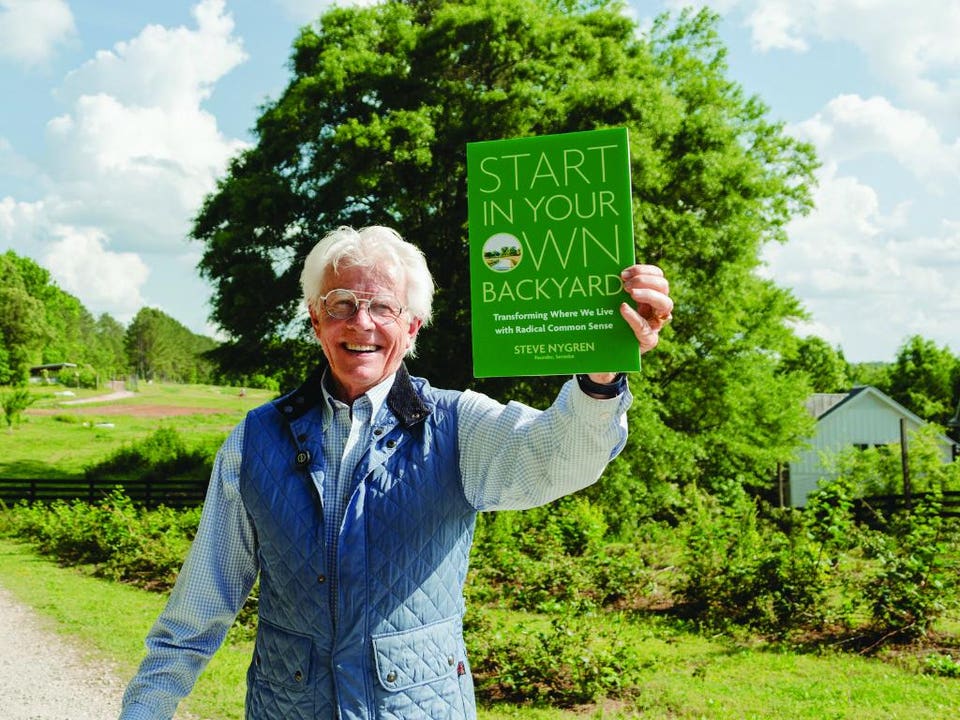
Steve Nygren did not set out to build a town. He was trying to protect the quiet.
What began as a weekend escape from the pace of corporate life, a 1905 farmhouse surrounded by the woodlands of rural Georgia, quickly became something more permanent for Nygren, his wife and their three young daughters. Away from the noise and churn of the city, the family spent more time outdoors, ate together and experienced what it meant to live in closer relationship with the natural world.
Then, during a run through the woods with his eldest daughter, Garnie, Nygren heard the rumble of a bulldozer. The sound signaled the possible arrival of conventional suburban development: forests cleared for rows of houses, strip malls and roads advancing toward the place his family had come to love.
“That spurred us into action,” Nygren said in an interview.
More than two decades later, that effort has grown into Serenbe, a community outside Atlanta designed around preserved land, walkability, agriculture, art and daily interaction. In his book, Start in Your Own Backyard: Transforming Where We Live with Radical Common Sense, Nygren looks back at how an attempt to protect his family’s surroundings became a much larger experiment in how people might live.
His central argument is simple: The places we build influence how we eat, move, gather and connect with nature and one another.
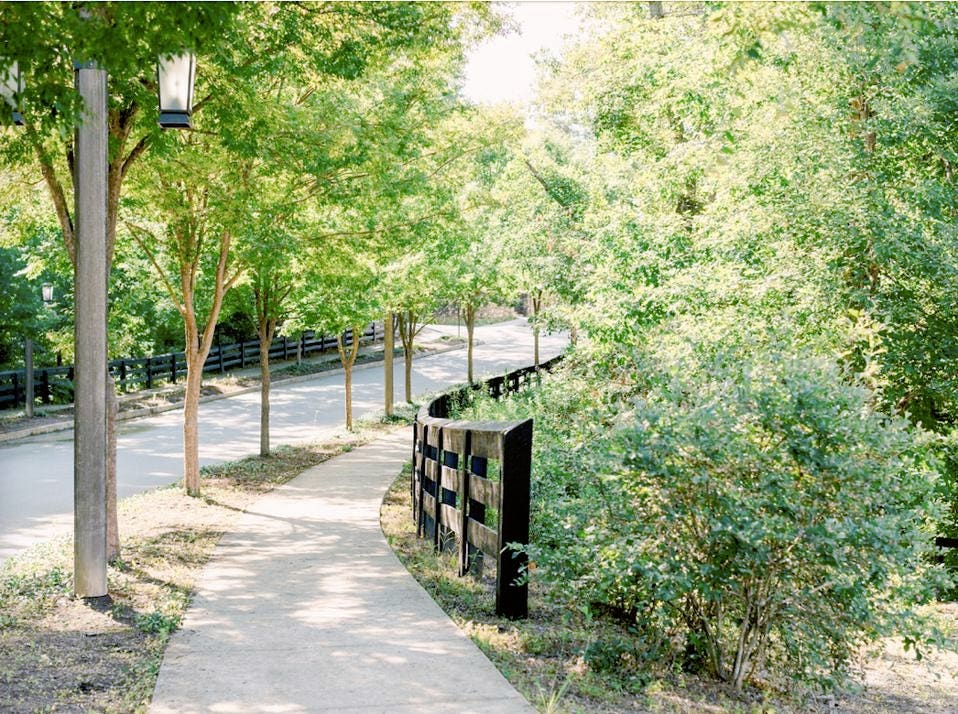
When I first experienced Serenbe, I was struck by how naturally the community seemed to belong to the land around it. Trees framed the roads and pathways, while farms, homes and businesses felt woven into the landscape. The entire place carried a quiet softness that invited visitors to slow down and pay attention.
My interest extended beyond the beauty of the setting. Serenbe was one of the rare large-scale concepts that felt remarkably intuitive. The more I experienced it, the more I found myself thinking: Of course a community could be designed this way. Why wouldn’t it be?
Speaking with Nygren again helped me understand that this atmosphere was not accidental. It was the result of thousands of decisions about what should be protected, where homes should sit and how residents might move through the community.
Serenbe’s development model preserves 70% of the land while clustering homes and businesses within the remaining acreage. Instead of beginning with the number of houses that could fit onto a parcel, its planning began with the natural features that should remain. For Nygren, this is the simplest explanation of biophilic design.
“Biophilia is the love of all living things: people, animals and plants,” he said in an interview. “We need nature in order to survive and thrive, so we embed biophilic principles in how we build.”
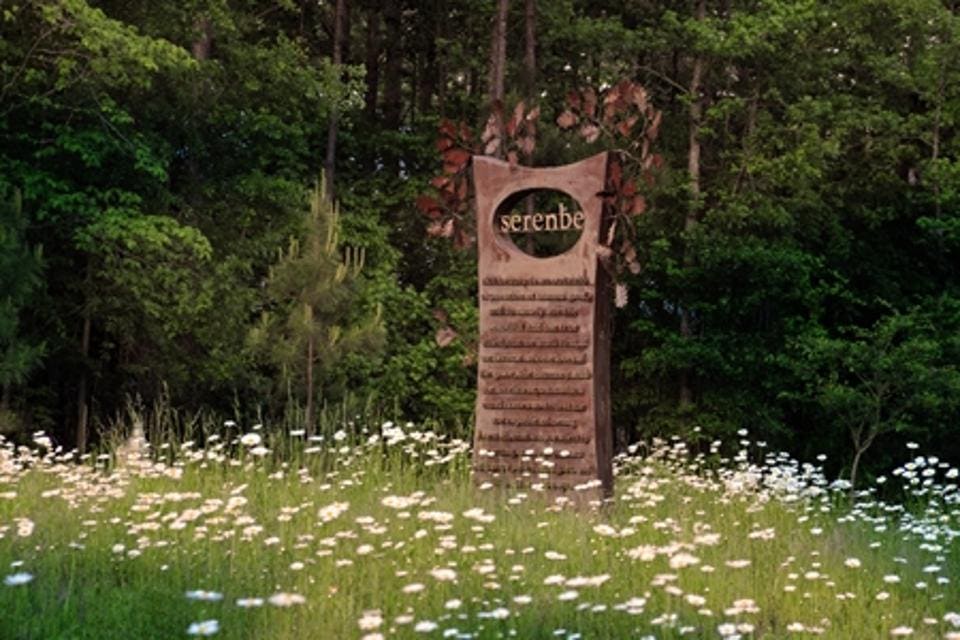
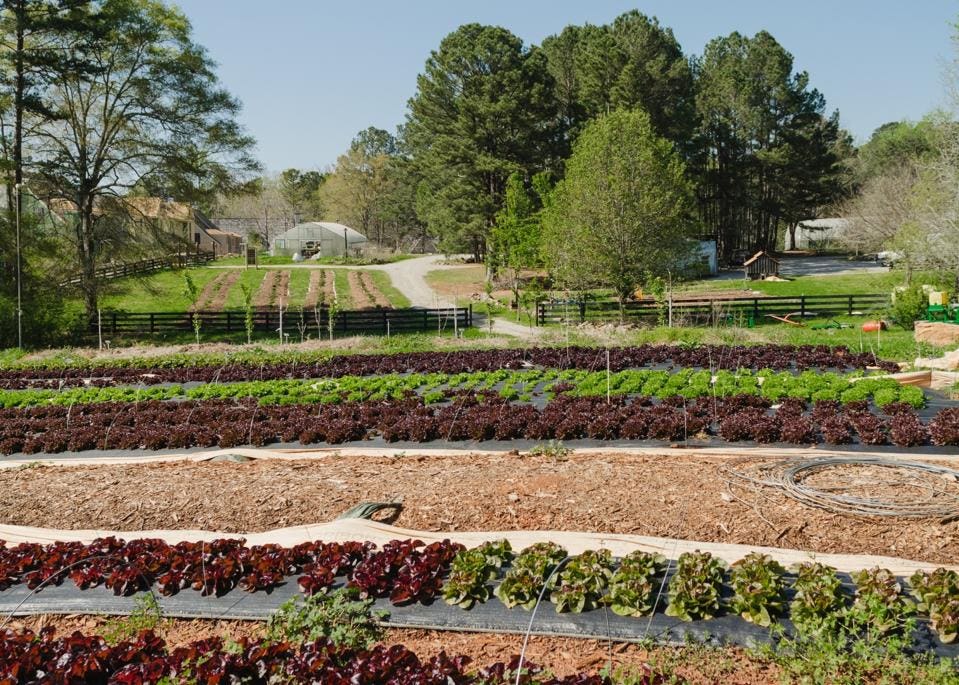
This relationship with nature extends beyond views of the forest. It is reflected in native plantings, wild meadows, edible landscapes, walking trails and a farm woven into the daily experience of the community.
As a chef and forager, I am particularly interested in what happens when food and nature are treated as part of a community’s infrastructure rather than optional amenities people must seek elsewhere. Food shapes our relationship with a place. It tells us what grows there, what season we are in and whose labor sustains us.
Buying directly from local growers offers more than access to fresh food. It allows people to better understand how food was cultivated, support those caring for regional landscapes and develop a greater awareness of what it takes to feed a community.
At Serenbe, edible plants are not confined to private backyards or ornamental gardens. Food appears along paths and in shared spaces, offering a simple reminder that agriculture does not have to be hidden from everyday life. It can coexist with it.
A blueberry bush can provide fruit, but it can also become a gathering place; a reason for children and adults to pause, pick, taste and exchange recipes.
It reminded me of my own childhood, when summer mornings often began with collecting wild berries at the edge of the yard or searching for ramps in the woods. Access to that kind of relationship with nature is shaped by place and privilege, but it is also shaped by education: knowing what grows around us, what can be eaten and what deserves protection.
That understanding continues to inform the way I live now. My own lawn has never been sprayed, and over time it has become a small refuge for deer, wild berries, native flowers, lightning bugs, butterflies and bees. It is not manicured in the conventional sense, but it is alive.
That may sound like a small gesture, but it reflects one of Nygren’s central ideas: The seemingly ordinary decisions we make about a place can profoundly influence how people and the natural world are able to live within it.
One of Serenbe’s most notable decisions was to move away from conventional suburban lawns.
Across the country, the manicured lawn has become so culturally ingrained that it is rarely questioned. Yet maintaining it can require substantial amounts of water and fuel, along with fertilizers, pesticides and herbicides. At Serenbe, native plants, meadows, edible landscapes and forested edges replace much of that resource-intensive model.
The point is not to abandon beauty or allow landscapes to go entirely unmanaged. It is to reconsider what we have been trained to perceive as beautiful in the first place. A meadow alive with insects, berries and native flowers may not have the uniform appearance of freshly cut grass. It does, however, function as part of a larger living system.
“Stop treating nature as something to control and start designing with it,” Nygren said.
That philosophy is relevant well beyond Serenbe. Not everyone can redesign a neighborhood, but many people can replace a section of lawn with native plants, grow herbs in a container, support a local farm or consider whether the products used around their home align with their environmental priorities.
For Nygren, sustainability is most successful when it is experienced not as deprivation, but as a fuller and more pleasurable way of living.
“True sustainability is not a sacrifice,” he said. “It’s a business model.”
People increasingly seek places with access to trees, fresh food, safe walking routes and opportunities to encounter one another. Nygren’s argument is that designing around those needs can create environmental, social and long-term economic value at the same time.
Serenbe’s design also acknowledges that authentic community cannot simply be declared in a brochure. People need regular opportunities to see one another.
Homes are clustered rather than spread across expansive lots. Front porches, patios and stoops face pedestrian paths. Streets and trails encourage walking, while mail collection and everyday services are positioned near places where people naturally gather.
A resident might leave home to retrieve a package and end up speaking with a neighbor outside a coffee shop. Children, parents and older residents cross paths because they have not been separated into entirely different spaces.
Serenbe does not manufacture friendship, but its design creates more opportunities for friendship to occur.
“I set the table with the way we build at Serenbe,” Nygren said. “Yet it’s the people who arrive that really make a place dynamic.”
It is an appropriate metaphor from someone whose first career was in hospitality. A beautifully set table cannot dictate the conversation that will unfold around it, but it can invite people to sit down.
Nygren considers an intergenerational population, meaningful access to nature and the daily presence of art to be three of the most important ingredients in a thriving community. Together, they allow creativity, nourishment and human interaction to become part of everyday life rather than activities reserved for special occasions.
“Joy is not accidental at Serenbe,” he said. “It’s designed into the very fabric of the place.”
Perhaps the most useful part of Nygren’s philosophy is his insistence that Serenbe should not be viewed as an isolated utopia or an impossible standard.
Most readers will never build a community of this scale. That is not what his book asks of them.
The proverbial backyard can be a home, a city block, a school, a community garden, a farmers market or any place where someone has enough influence to make one thoughtful change. It might begin with planting something edible, creating a place for neighbors to gather, supporting a regional farmer or advocating for a safer walking path.
Serenbe is the large, imperfect and still-evolving result of one decision to act. Its greatest lesson may not be that every community should look exactly like it, but that we should examine the places where we already live more carefully and ask: Do they bring us closer to the land, our food and one another, or do they continually push us farther apart?
“Change, at any level, is possible,” Nygren said. “You don’t need a master plan or a grand strategy. You need the first step, a little passion and the belief that your behavior matters.”
For Nygren, optimism is not passive. It is the conviction that our actions can offer an example and inspire others to follow.
The backyard is where he began. His hope is that the rest of us will begin wherever we are.