
Homeowners are discovering that small, welcoming gestures can transform their yards into neighborhood gathering spots. Designers say these choices are easier, and more powerful than you might think.

.png)
What if your garden or front yard — even your driveway — helped welcome the neighbors?
Homeowners are discovering that small, welcoming gestures can transform their yards into neighborhood gathering spots. Designers say these choices are easier — and more powerful — than you might think.
In a time when people feel increasingly isolated and disconnected from nature and each other, opportunities to grow community like this are especially meaningful.
“All these bits of humanity in the garden seem to get people to stop and slow down and enjoy their surroundings, encourage neighborliness with one another, offer a bit of kindness and joy,” says designer Naomi Goodman of Seattle’s Firecracker Design Studio.
Beginning in the 1950s, with the rise of suburbia, neighborhood design became more insular — individual homes with driveways, front yards meant for display more than interaction, and fenced backyards that replaced shared gathering spaces. We lost places like village squares and front porches, where meeting your neighbor was effortless.
Gradually, people started finding ways to shift the focus from “Keep Out” to “Welcome.” Today, designers and planners are trying to build community into the landscape itself.
.png)
.png)
Steve Nygren, author of “Start in Your Own Backyard,” created Serenbe, a wellness community in Chattahoochee Hills, Ga., that interweaves green space with agriculture, housing and retail.
Nature is central to Serenbe’s design. There is a 25-acre farm, a seasonal farmers market, forest trails and a food forest integrated in the community. The homes feature porches and gathering spots. Benches, small patios, even the community mailboxes are placed on main paths to encourage everyday interaction.
Welcome comes in as many forms as you can imagine, and thoughtfulness has impact far beyond words on a mat. What does this look like on a smaller scale, particularly in already-built neighborhoods or dense urban areas?
Whether you’re a raging extrovert, confirmed introvert or somewhere in between, the beauty is you can choose the form it takes and the level of interaction you’re ready for.
Simple gestures, like leaving out a water bowl for passing dogs or installing a Little Free Library, invite low-pressure connections. Other touches can encourage participation or play.
Even if your house doesn’t have a porch, having a seat within waving distance of the sidewalk brings you closer to your neighbors. Maybe you bring the bench all the way to the sidewalk, inviting neighbors to stop.
“Having a bench in the front is basically asking a visitor to sit and stay for a while,” says Courtney Olander of Olander Garden Design. “It’s a space for conversation — a pause, a rest. It also gives the homeowner a place to watch the world go by and connect with the mailman and neighbor walking the dog. It’s an opportunity for a quick hello.”
“Just put a bench under a tree,” agrees Nygren. “It’s amazing what it does.” He adds a surprise with the bench to lift the spirits — sometimes a mosaic, sometimes a book.
In one case, when a tree had to be cut down, Nygren added a bench and a wooden box. In the box? “The Giving Tree” by Shel Silverstein.
.png)
In Seattle’s Tangletown neighborhood, parking strips and sidewalks overflow with small kindnesses: climbing steps on a tree, a tether ball, free fruit or plants, swings, benches, Little Free Libraries offering art, food and puzzles — there’s even a putting green installed in the sidewalk strip.
Goodman’s neighborhood has several poetry boxes stocked with paper copies so people can take a poem home.
Sometimes, a yard almost becomes an art installation.
“A few years back,” Goodman recalls, “one of my neighbors hung long metallic streamers across her entire driveway and encouraged neighbors to come and walk under them. It was so magical. Another neighbor hangs a bell out from a low hanging tree at the New Year with instructions encouraging passersby to pull and ring the bell. It’s such joyous fun to encounter out on a walk.”
Some homeowners invite neighbors more directly, hosting summer potlucks or holiday gatherings.
In Wallingford, one retired landscape designer has hosted a holiday party for gardeners for decades. Bill Thorness, head of the Great Seattle Seed Swap, suggests neighbors have seed-swapping parties annually to refresh their home seed collections.
Amy Hedman Turnbull says her garden near Paine Field in Everett has become a retreat for the community.
“I host playdates where kids leave with hands full of flowers and bellies full of berries and the garden has become a safe haven — not just for children, but for moms as well,” she says. “This is our version of wellness: a living, hands-on space designed to welcome pollinators, birds, frogs, kids, moms and families.”

In addition to boosting wellness and property values, green spaces are known to invite community. Planting a tree to make shade over the sidewalk — or preserving a mature ones — is an act of kindness for your neighbors. So is tending the plants of your block’s roundabout, median or other public green space.
Including food-bearing plants in your design can be beautiful and educational — and delicious if you choose to share the bounty. A simple bowl with a “Free” sign makes it easy. Consider your wider community by planting a little extra for your local food bank.
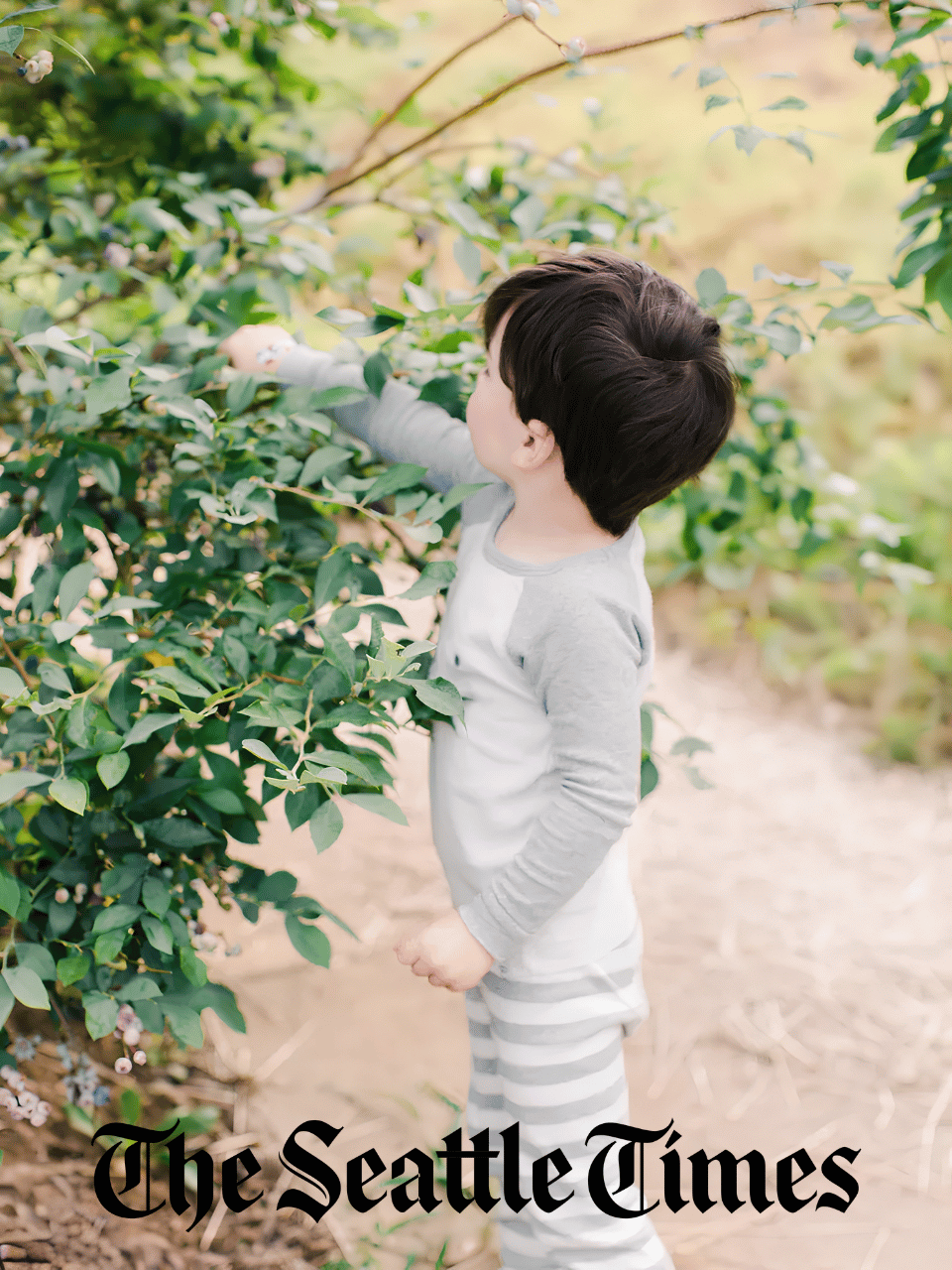
At Serenbe, Nygren says, “One of the greatest things we did for community well-being is to have blueberry bushes at every crosswalk. It’s wonderful to see the kids understanding the growing season and people trading recipes.”
.png)
Planning for wildlife will make your yard a source of awe and wonder. Birdbaths, pollinator plants, bee watering stations and bird feeders invite daily encounters.
Dahlias are so generous with their flowers to supply sidewalk bouquets. Fragrant plants like lavender, roses, lilac and honeysuckle engage the senses and can give passersby and instant mood lift.
Interactive art can spark reflection, too. On Capitol Hill, Seattle’s Wishing Tree — where people leave wishes to be added to a sidewalk tree — has become a neighborhood attraction.
Which of these ideas speaks to you? Consider taking one small step this spring toward making your neighborhood more welcoming, fun or inviting.