

Composting has major environmental benefits. At Serenbe, it’s remarkably easy.
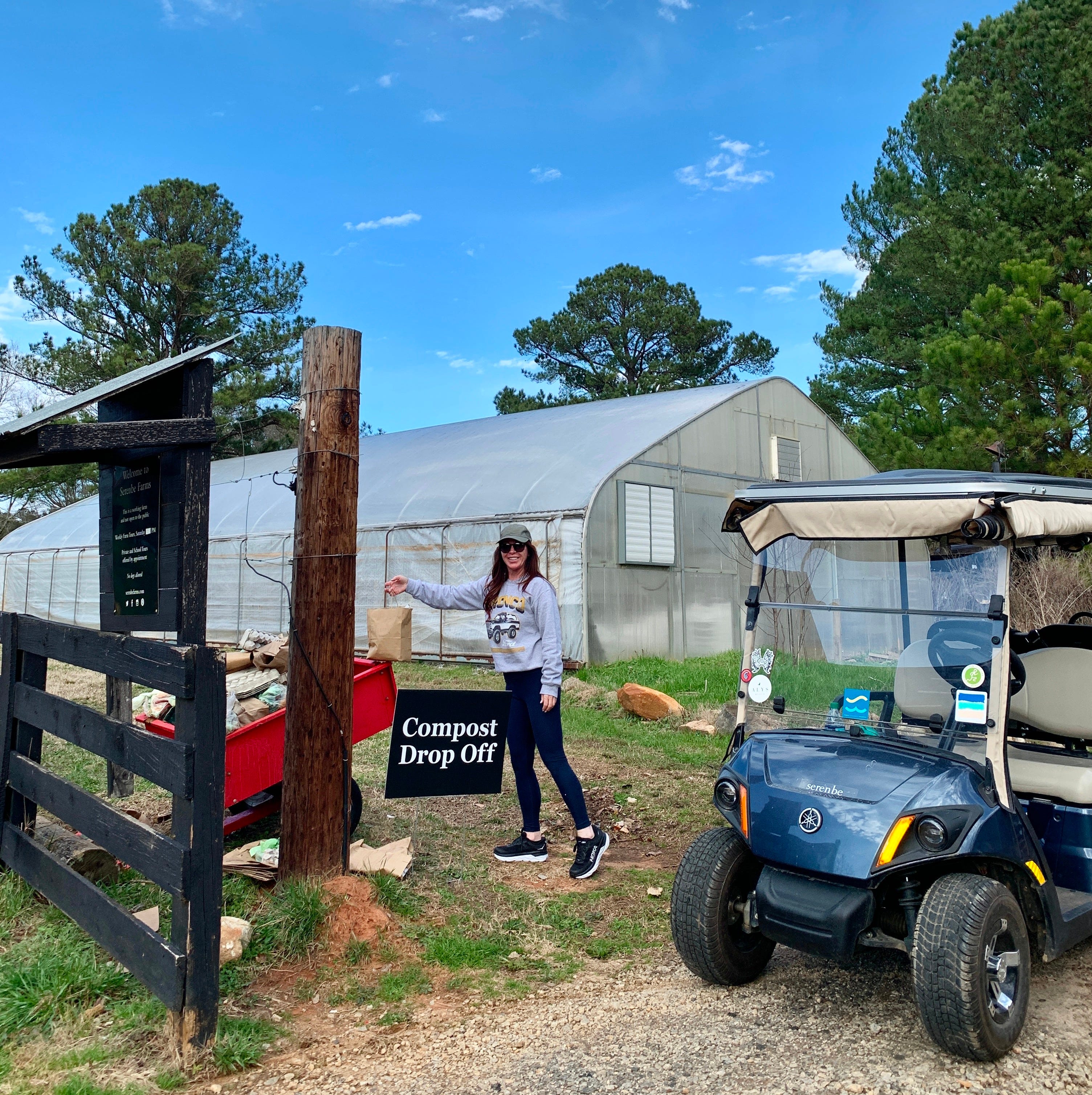
Reducing our carbon footprint and living in greater harmony with nature are goals many of us share but they can sometimes feel abstract or hard to act on. Enter composting. It’s simple, tangible, and incredibly impactful. At Serenbe, it’s also remarkably easy.
Compost is a nutrient-rich, dark, crumbly material created from decomposed organic waste like food scraps and yard trimmings. It acts as a natural fertilizer and soil conditioner, improving soil health, boosting fertility, and increasing water retention. Compost forms through a natural decomposition process that’s accelerated when the right balance of “greens” (nitrogen-rich materials like food scraps) and “browns” (carbon-rich materials like leaves) is combined with air and water, creating the perfect environment for beneficial microorganisms to thrive.
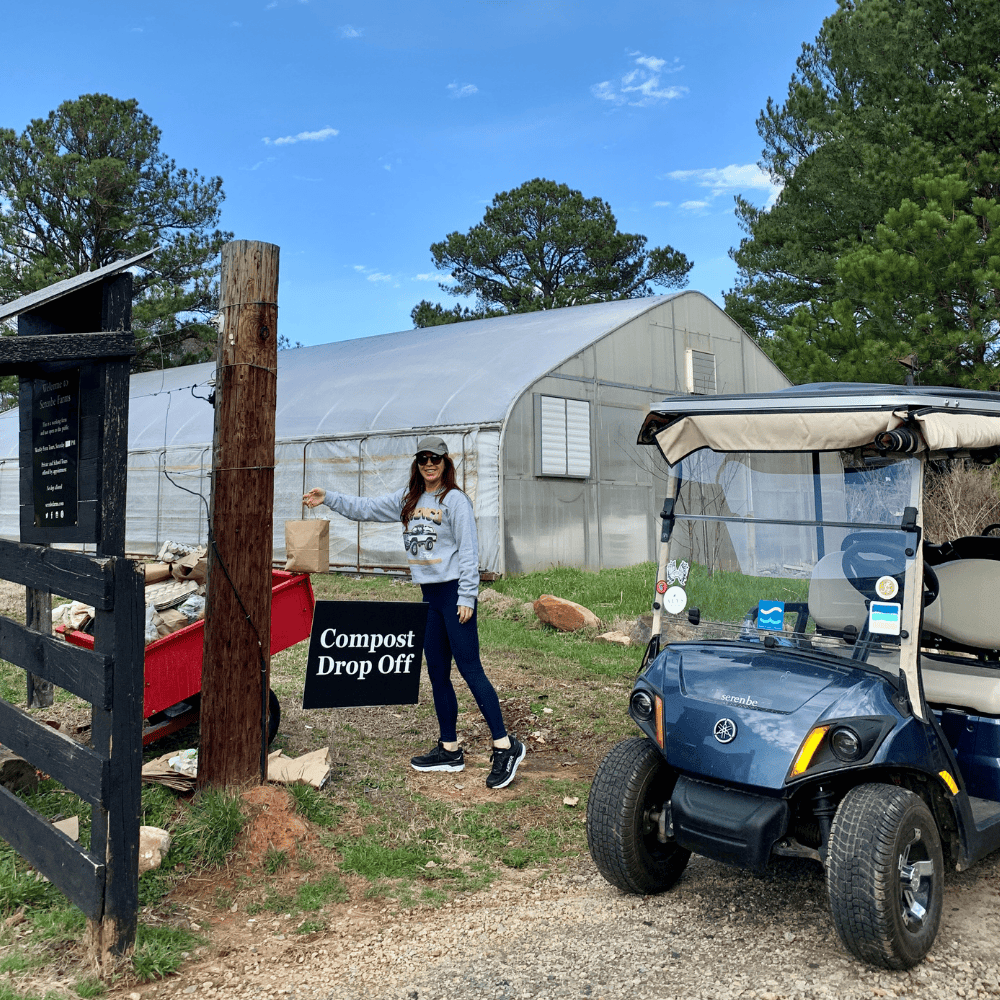
Serenbe Farms is home to the first compost drop-off station in Chattahoochee Hills, made possible by funding from the Art Farm Environmental Council. This state-of-the-art facility is uniquely efficient, using blower-powered aeration that forces air up from the base of the compost piles. The result is better airflow, faster decomposition, increased capacity, and higher-quality compost. As the piles heat to over 130 degrees, odors are minimized and pathogens are reduced, producing clean, healthy soil ready to return to the land. Unlike most home compost piles, Serenbe Farms’ facility can also process some generally harder-to-compost items like meat, dairy, and citrus.
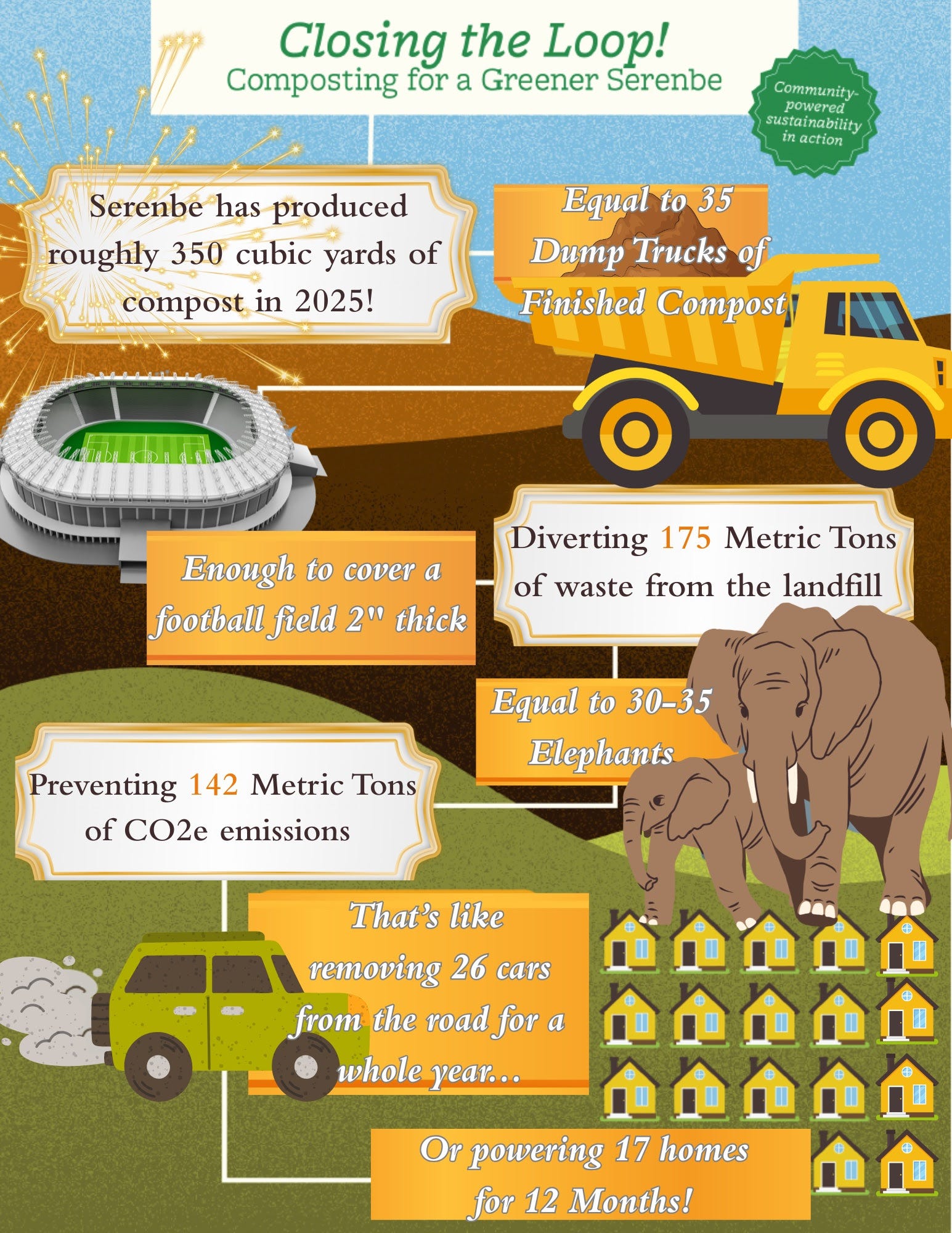
In 2025, Serenbe’s composting program truly hit its stride. Over the course of the year, the compost station produced approximately 350 cubic tons of fertile soil, diverting 175 metric tons of food waste from landfills and preventing 142 metric tons of CO₂ emissions. That’s the equivalent of taking 26 cars off the road for an entire year or powering 17 homes over the same period.
Small daily habits, big collective impact.
Getting started with composting at Serenbe couldn’t be simpler:
Not a Serenbe resident? You can still compost by using it as a natural fertilizer in your garden or potted plants, donating it to a local school or community garden, or partnering with a nearby farm. Remember, unless you have access to a commercial grade composting facility – and even then, it’s best to check – avoid meat, citrus, and dairy. If you’re new to composting, a helpful rule of thumb is when in doubt, leave it out.
Nature is inherently regenerative. At Serenbe, that principle is built into daily life, making it easy and convenient for residents to participate in systems that give back to the land. Composting not only supplies Serenbe Farms with rich soil for its fields, it also keeps valuable organic matter out of landfills.
Residents then experience the benefits full circle through fresh produce at the Saturday Farmers Market or as members of the CSA Farm Share program. It’s a simple act, thoughtfully supported, with lasting impact for people, place, and planet.