


Land Preservation and Biophilia Shape Life at Serenbe
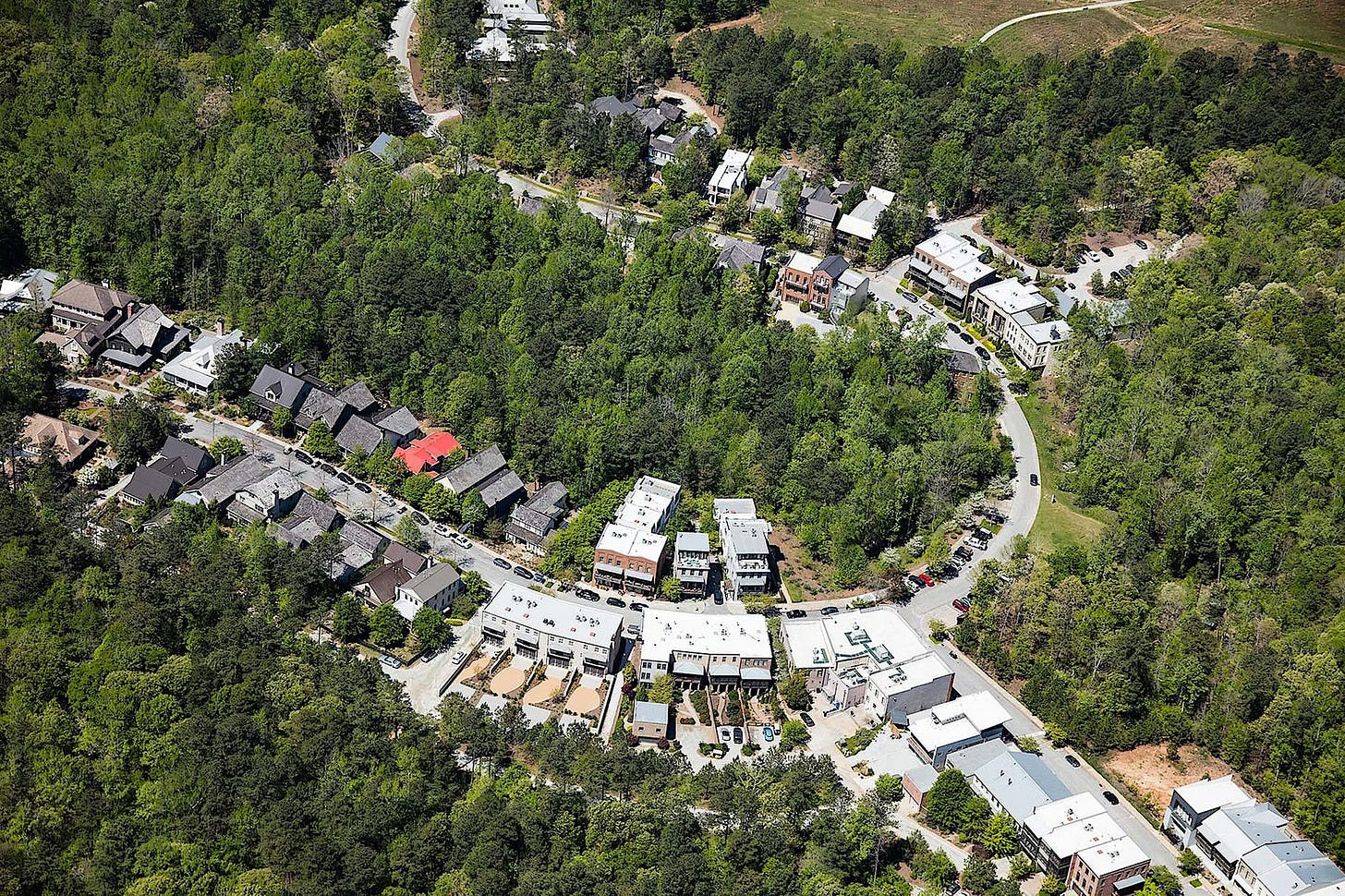
Conventional residential development typically disturbs as much as 80 percent of the surrounding land to build homes. At Serenbe, that model is turned entirely on its head. Located in Chattahoochee Hills, Serenbe is shaped by the community’s award-winning 70/30 conservation zoning policy, which requires that 70 percent of the land remain permanently preserved as green space, forest, or agricultural land, while limiting development to just 30 percent. This approach promotes compact, walkable neighborhoods, curbs sprawl, and protects the region’s rural character.
This biophilic planning philosophy places nature at the forefront, rather than imposing the built environment in ways that degrade ecosystems and natural resources. The results are not only good for the environment, but also for us. Serenbe’s trees remove an estimated 1,484 tons of pollution from the air each year, significantly improving air quality. To put that in perspective, that amount of pollution is equivalent to the annual emissions of more than 180,000 cars.
Within this preserved landscape, each Serenbe hamlet has been intentionally designed to support wellness in three essential areas: walkability, community, and access to nature.
Walkability, in particular, is a cornerstone of healthy community design. In his influential book Walkable City, urban planner Jeff Speck argues that walkability is one of the most effective tools for addressing modern challenges such as public health crises, environmental degradation, economic inequality, and social isolation. His message is simple but powerful: when people walk, communities thrive. Serenbe reflects this philosophy through compact village centers, close proximity to daily needs, and a deliberate resistance to sprawl. Sidewalks and trails safely connect residents to restaurants, shops, neighbors, and miles of natural beauty.
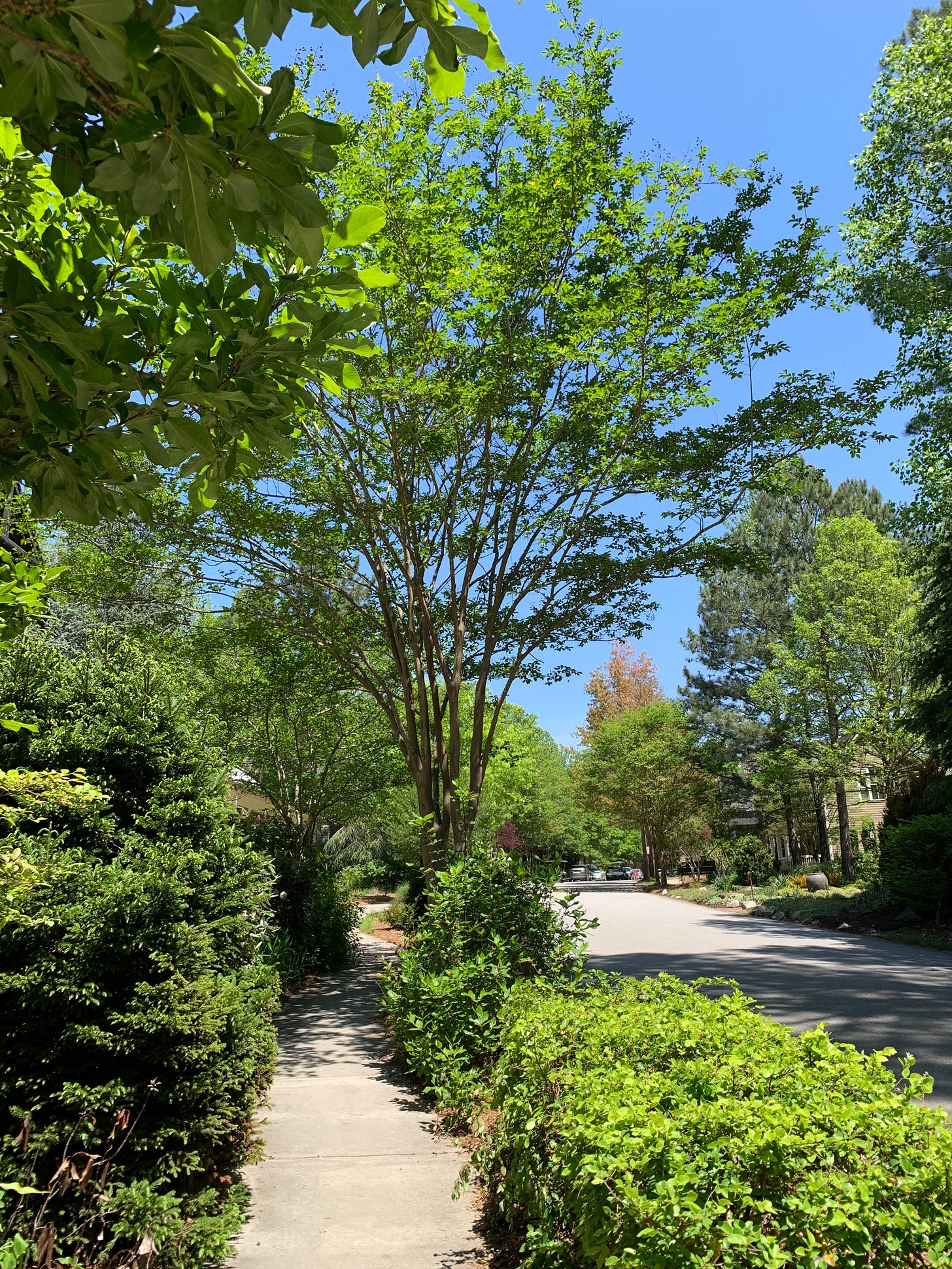
Community is another critical, yet often overlooked, component of wellness. Our built environment has a profound influence on how often and how meaningfully we connect with others. According to Pew Research, only 31 percent of people say they know their neighbors. Yet studies show that regular contact with ten or more people in one’s neighborhood has a measurable impact on happiness. Serenbe’s clustered neighborhoods, front porches pulled close to sidewalks, centralized mail houses, shared greens, frequent community events, and thoughtful placemaking all encourage chance encounters and everyday social connection.
And at the heart of it all is nature itself. Serenbe’s land preservation model and community design place nature at the center of daily life, unlocking a wide range of physical, mental, and cognitive health benefits. Research shows that as little as 120 minutes per week in nature can reduce stress and anxiety, boost immune function, and even improve sleep quality. With more than 20 miles of trails winding past creeks and waterfalls, along with abundant communal greenspaces, playgrounds, in-ground trampolines, and gathering areas, nature is a constant presence.

The commitment to wellness and sustainability extends beyond the landscape and into every home. Each residence in Serenbe is EarthCraft-certified, a rigorous green building standard developed by Southface and the Greater Atlanta Home Builders Association. Often considered the gold standard for residential green building in the Southeast, EarthCraft certification ensures high indoor air quality, reduced environmental impact, and meaningful savings on energy and water use. EarthCraft homes save homeowners an average of 28 percent on energy bills. Since 2017, Serenbe has gone even further by requiring geothermal heating and cooling systems in all new homes, replacing conventional HVAC systems and delivering up to 60 percent total energy savings.
Taken together, these choices reflect a fundamentally different approach to development that values long-term health, connection, and resilience over short-term convenience. By preserving land, prioritizing walkability and community, and building homes that work in harmony with the environment, Serenbe demonstrates that thoughtful design can restore our relationship with nature while creating places where people truly thrive.